
Most fitness tracking tools obsess over the scale. A scale measures one thing — mass — and pretends that one number captures progress. A Body Visualizer does something different: it tracks shape. And because resistance training, body recomposition, and recovery often shift shape without shifting the scale at all, a Body Visualizer can be a more honest progress tool than the bathroom scale ever was.
This article shows how to use a Body Visualizer as part of a fitness tracking workflow without falling into the daily-weigh-in trap.
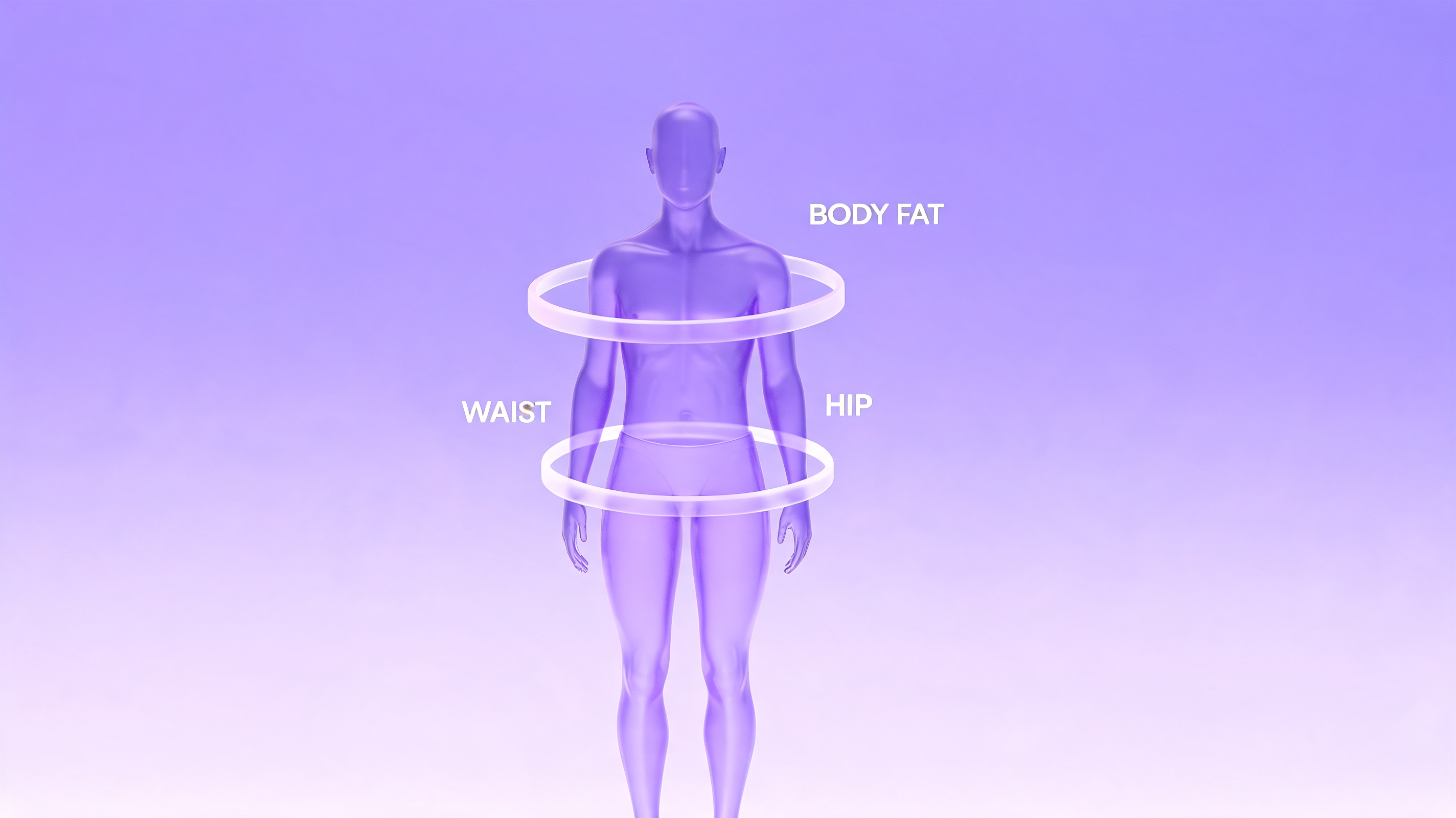
Why the Scale Lies (And the Body Visualizer Doesn't)
The scale moves with:
- Hydration
- Glycogen stores
- Salt intake
- Food in the digestive tract
- Time of day
- Time of cycle
Body shape moves with:
- Actual change in tissue composition
That is why two months of consistent training can leave the scale unchanged while your Body Visualizer silhouette quietly redistributes — waist narrower, shoulders broader, hips slightly tighter. The Body Visualizer is the tool that surfaces this otherwise invisible progress.
The Body Visualizer Tracking Workflow
The basic loop is simple:
- Pick a fixed interval (weekly, biweekly, or monthly — monthly is best for most lifters).
- Re-take your tape measurements under consistent conditions.
- Enter them in the Body Visualizer.
- Screenshot the Body Visualizer 3D preview from front, side, and three-quarter angles.
- Save the screenshot with the date.
After three months you will have nine Body Visualizer images that, side by side, tell a clearer story than 90 daily scale readings.
What to Track Beyond the Scale
The Body Visualizer reports several metrics worth tracking explicitly:
- Waist circumference — moves with central adiposity. A waist that shrinks while weight stays flat is exactly the kind of recomposition the scale hides.
- Waist-to-Height Ratio (WHtR) — Body Visualizer computes this automatically. WHtR is a more clinically interesting number than BMI.
- Waist-to-Hip Ratio (WHR) — Body Visualizer also computes this. Tracks distribution.
- Estimated body fat % — Body Visualizer estimates this via Deurenberg. Useful as a trend signal, not an absolute reading.
- Hip and chest circumferences — Body Visualizer warps its 3D preview from these. Useful for resistance training progress.
A spreadsheet with these columns next to your Body Visualizer screenshots is a low-tech, high-signal way to track fitness.
Body Visualizer Tracking for Common Goals
Goal: Cutting (Fat Loss)
In a cut, scale weight should drop, but shape change is what people actually want. The Body Visualizer lets you compare the silhouette at week 0, week 4, week 8 and see how much of the scale loss showed up in the waist vs the rest of the body. A Body Visualizer is especially helpful at the end of a cut, when scale movement slows and motivation gets fragile.
Goal: Bulking (Muscle Gain)
In a clean bulk, the Body Visualizer 3D preview should show shoulders and chest widening relative to waist. If your Body Visualizer waist is growing as fast as your chest, that is useful early-warning that the surplus may be too aggressive. The Body Visualizer turns "how dirty is my bulk?" into a visible question.
Goal: Body Recomposition
This is where the scale is most useless and the Body Visualizer most valuable. Recomp can hold scale weight constant for months while shape changes dramatically. The Body Visualizer renders that change explicitly — same weight, different silhouette.
Goal: Maintenance
Even on maintenance, monthly Body Visualizer snapshots catch drift early. A 2 cm waist creep over six months is invisible in the mirror but obvious in a Body Visualizer side-by-side.
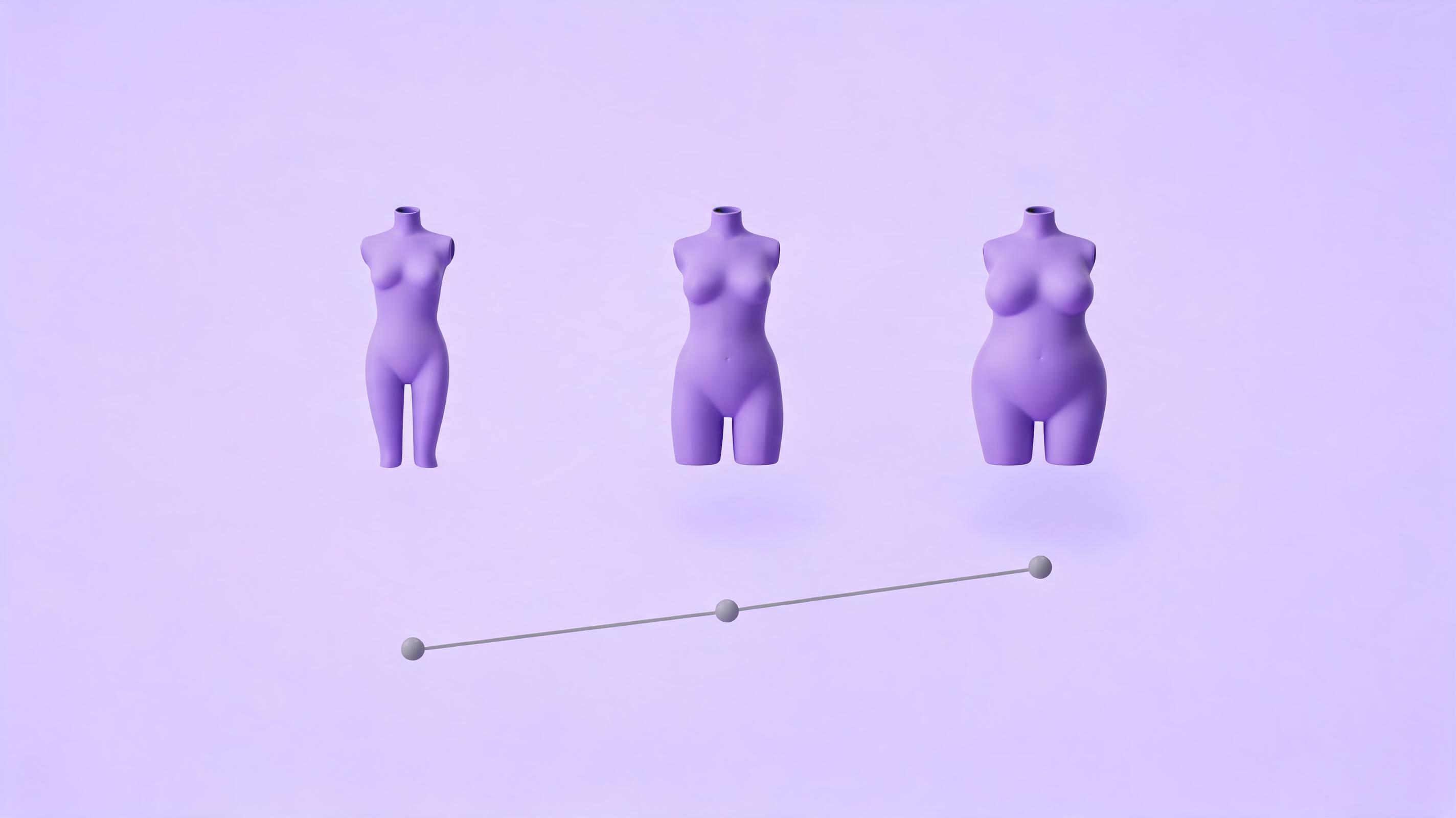
Body Visualizer + Tape Measure Beats Scale + Mirror
Without a Body Visualizer, your two main feedback signals in the gym are the scale and the mirror. Both have known problems:
- The scale is too low-dimensional (one number).
- The mirror is too high-dimensional and biased (mood, lighting, recency).
A Body Visualizer sits between them — multi-dimensional enough to be honest, and abstract enough to be emotionally neutral. The Body Visualizer mannequin doesn't have a bad-lighting day.
Body Visualizer Frequency: How Often to Re-Measure
Different fitness contexts call for different cadences with the Body Visualizer:
- Aggressive cut: Body Visualizer every 2 weeks.
- Slow recomp: Body Visualizer monthly.
- Bulk: Body Visualizer every 3–4 weeks.
- Maintenance: Body Visualizer quarterly.
More frequent Body Visualizer sessions than this just amplify noise. Body shape simply does not move week to week in a measurable way for most people. A Body Visualizer used too often turns into a stress device, which is the opposite of the point.
Combining a Body Visualizer with Other Fitness Data
A Body Visualizer is one signal among several. A useful weekly review might include:
- This week's training log
- Average sleep / HRV (if you track them)
- Weekly average scale weight
- Latest Body Visualizer silhouette + screenshot
Reading all four together is far more informative than any one of them alone. The Body Visualizer often becomes the anchor — the visual reminder of where things actually stand.
Sharing Body Visualizer Progress Safely
Because the Body Visualizer mannequin is intentionally abstract and faceless, Body Visualizer screenshots are much safer to share than progress photos. You can:
- Send a Body Visualizer screenshot to a coach without sharing a real photo of yourself.
- Compare Body Visualizer silhouettes across months without anyone identifying you.
- Post a Body Visualizer transformation publicly without becoming a meme.
This is one of the underrated practical benefits of a Body Visualizer over progress photos.
Body Visualizer Limitations for Fitness Tracking
A few honest caveats:
- The Body Visualizer cannot measure muscle directly. It infers from circumferences.
- The Body Visualizer body fat estimate is rough; treat it as a trend, not a precise number.
- Tape measurement consistency dominates Body Visualizer accuracy. The same person, measuring sloppily, will get noisy Body Visualizer readings even if the underlying body is stable.
- A Body Visualizer is not a substitute for a DEXA scan if you need an actual body composition number.
Used as a long-term trend tool with stable measuring habits, the Body Visualizer outperforms the scale by a wide margin. Used as a daily mood device, the Body Visualizer is just as misleading as the scale.
Get Started With a Body Visualizer Fitness Log
Pick a date. Take your measurements. Open the Body Visualizer. Screenshot the preview. Save it. Set a reminder for one month from now.
Three months from that first session, you will have something most people who train do not — an honest, visual, non-photographic record of how your body actually changed.
👉 Open the Body Visualizer and take your first snapshot today.