
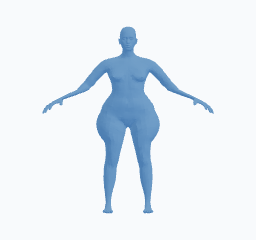
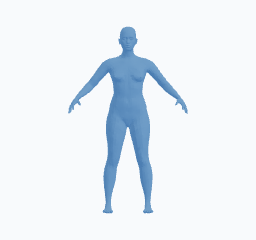
How to use this body type calculator
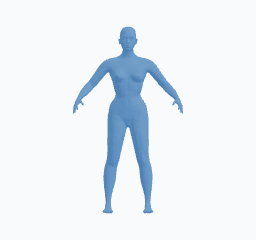
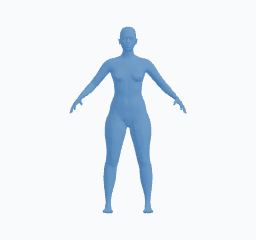
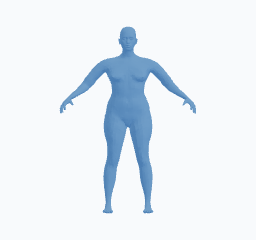
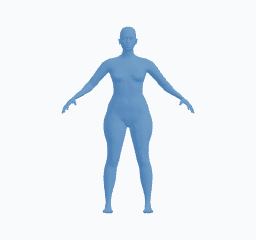
Start the body type calculator with four measurements: chest or bust, waist, hips, and shoulder width. Choose centimetres or inches before entering your numbers. The shape label updates beside the inputs, while the estimated model lets you examine the proportions from different angles without leaving this page.
The body type calculator accepts optional height and weight for the preview. Leaving them blank uses the reference values printed beneath the form. Those defaults are examples, not estimates of your measurements. Adding your actual height and weight provides context without changing the circumference rules used for the label.
Use the body type calculator examples to understand a result before entering personal measurements. Each card includes its dimensions and the rule that applies. Loading a card replaces the displayed inputs. You can then change one measurement and observe the resulting classification and approximate three-dimensional outline.
Tips for accurate body type calculator results
Keep a written record of the original measurements and the units you used. This body type calculator displays measurements with at most one decimal place but retains conversion precision internally. A slightly different displayed number after a unit change does not mean your body measurement has changed.
How to measure bust, waist, hips and shoulders
For the body type calculator, measure chest or bust around the fullest part with the tape level. Measure the natural waist without pulling the abdomen inward. Measure hips around the fullest part of the seat. These three inputs are circumferences: the tape travels all the way around.
Shoulder width in the body type calculator is different. Measure across the back between the outer shoulder points, ideally with another person helping. Do not wrap the tape around your shoulders. Width changes the model's shoulder proportions; it is never compared directly against hip circumference to assign a label.
Repeat uncertain measurements under similar conditions. The body type calculator cannot detect a twisted tape, thick clothing, a mistaken unit, or a number copied from the wrong field. The body measurement visualizer explains how individual measurements affect a model when you want to explore more than a category. For the numeric health ratio instead of a shape label, try the Waist Hip Ratio Calculator.
Body type calculator results explained
The body type calculator uses ordered descriptive rules, not a medical classification. Apple-like proportions are checked first: waist must be at least 90% of hips and at least 85% of chest. This order prevents a larger-waist example from being captured by a later rectangle rule.
Next, the body type calculator checks for hourglass-like proportions. Chest and hips must differ by no more than five centimetres, and waist must be no more than 75% of the smaller measurement. These are transparent product rules rather than a claim that human bodies have universally agreed category boundaries.
The body type calculator checks pear-like proportions next, where hips are at least five centimetres larger than chest. The following inverted-triangle check requires chest to be at least seven centimetres larger than hips. Both comparisons use circumferences, so shoulder width cannot accidentally decide either category.
The body type calculator then checks rectangle-like proportions: chest and hips differ by at most seven centimetres, and waist is at least 80% of the smaller value. Balanced is the fallback when earlier checks do not apply. It means no selected rule matched, not that the result is preferable.
Because the body type calculator stops at the first matching rule, the order matters as much as each threshold. A small input difference near a boundary can change the label while the model changes only slightly. Read the dimensions and the explanation together instead of treating the label as a permanent identity.
Body shape calculator for men
This body type calculator includes male and female reference models and separate example dimensions. Both modes use the same circumference rules. Switching the reference sex changes the illustrative model and available examples; it does not establish a different standard of attractiveness or diagnose a hormonal or biological characteristic.
If you searched for a male body shape calculator, start with measured chest, waist, and hips rather than choosing a category in advance. The body type calculator cannot infer muscle mass from a broader chest. Use the male visualizer to explore individual measurements with additional controls.
For a female body shape calculator, the same measurement discipline applies. The body type calculator cannot determine bra size, clothing size, pregnancy changes, or breast volume from bust circumference. The female visualizer offers a wider set of controls when a single body-shape label is less useful than examining proportions.
Dressing and fitness context
A body type calculator can help describe where garments may need different amounts of room. Compare your actual measurements with the specific manufacturer's size chart, then consider ease, fabric stretch, and garment cut. An approximate model cannot tell you whether a particular waistband, sleeve, or neckline will fit comfortably.
Use a body type calculator as a conversation aid rather than a wardrobe restriction. A pear-like result does not require any particular style, and an apple-like result does not rule out fitted clothing. Personal comfort, movement, and preference remain more useful than rules about what someone should conceal.
The body type calculator also cannot prescribe an exercise routine or predict how training will redistribute tissue. If your interest is body composition, the body-fat and abs guide separates a mathematical scenario from an appearance guarantee. Changing measurements is not necessary to make a category more acceptable.
Limits of a body type calculator
A body type calculator describes selected external proportions; it does not assess health. For a separate adult health-risk reference, use the waist hip ratio calculator and follow its measurement protocol. A natural-waist styling measurement is not automatically interchangeable with the waist location used for that assessment.
This body type calculator uses a bounded reference mesh, so it cannot reconstruct posture, bone structure, asymmetry, skin, or individual tissue distribution. Very large or small input differences may exceed the model's visual range. The numerical label remains a rule-based description and should never be interpreted as a personal scan.
Frequently asked questions
What is my body type?
Enter consistent chest, waist, and hip measurements in the body type calculator to receive a descriptive label. The result reflects the ordered rules explained above. It is not an identity, diagnosis, or assessment of how your body should look, and another system may use different definitions.
Is body type the same as body shape?
On this page, body type calculator means a circumference-based body shape calculator. It does not assign ectomorph, mesomorph, or endomorph labels and cannot infer metabolism. Read the inputs and method when comparing tools, since the phrase body type is used for several different ideas online.
Can men use this tool?
Yes. The body type calculator provides a male reference model and male examples while applying the same transparent proportion rules. Use measurements from your own body rather than a clothing label. Shoulder width is used for the illustration, not as a replacement for chest circumference.
Why does the model look different from me?
The body type calculator starts with a reference mesh and adjusts selected proportions. People with identical measurements can have different outlines. Missing height and weight use clearly labelled defaults. Treat the preview as an explanation of inputs, not a likeness or a prediction of future appearance.
Do I need a photo or an account?
No. This body type calculator works from typed measurements and requires no photo or login. It does not create a personal measurement history. If you need a record, keep your original measurements and dates separately; the site's privacy policy explains its broader data practices.