A female body shape calculator uses four measurements — shoulders, bust, waist, and hips — and applies a fixed sequence of comparisons. This calculator returns hourglass, pear, inverted triangle, rectangle, apple, or balanced. There's no photo upload or scan: the result comes from arithmetic applied to your tape-measure numbers.
The arithmetic is simple, but the result depends on where and how you measure. A bust reading taken at the wrong point or a waist measured at the navel instead of the natural waist can change the comparisons. This guide covers both the exact rules and a repeatable measurement technique.
New to these tools? Start with what a body visualizer is before comparing the rules below.
Key Takeaways
- The dedicated calculator checks shoulders, bust, waist, and hips in a defined order and can return six labels.
- Bust must be measured at the fullest point; bra band size is a different measurement.
- The WHO report discusses waist-to-hip ratio as a population-level screening measure, not a diagnosis or a body-shape rule.
- The 3D visualizer uses a separate approximation, so its live silhouette and its shape label are not the same calculation as this dedicated calculator.
What Does a Female Body Shape Calculator Actually Compute?
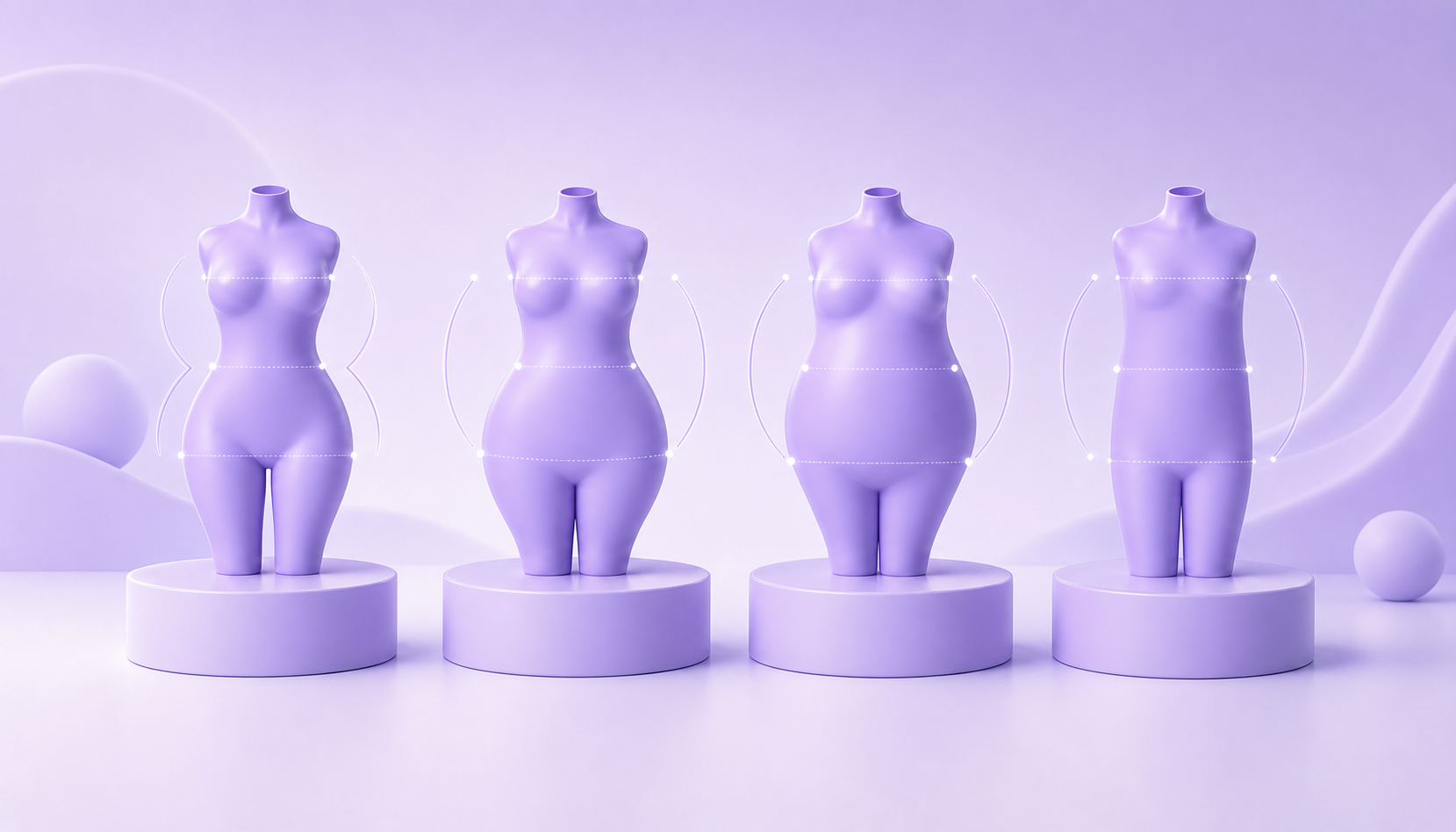
The dedicated calculator evaluates these rules from top to bottom and stops at the first match:
| Result | Exact rule |
|---|---|
| Hourglass | abs(bust - hips) ≤ 5 cm and waist ≤ 75% of the smaller of bust and hips |
| Pear | hips ≥ bust + 5 cm and hips ≥ shoulders + 3 cm |
| Inverted Triangle | shoulders ≥ hips + 5 cm or bust ≥ hips + 7 cm |
| Rectangle | abs(bust - hips) ≤ 7 cm and waist ≥ 80% of the smaller of bust and hips |
| Apple | waist ≥ 90% of hips and waist ≥ 85% of bust |
| Balanced | None of the rules above matched |
Rule order matters: a measurement set that satisfies an earlier row is not tested against later rows. To see proportions as a rotatable model, open the female body visualizer.
How Each Measurement Affects the Result
All four inputs can change the result because the calculator checks ordered rules. Shoulders help distinguish pear from inverted triangle; bust-to-hip difference contributes to hourglass, pear, inverted triangle, and rectangle; waist proportions determine whether hourglass, rectangle, or apple rules match. Measure every input consistently.
Shoulders: Straight Width, Not Circumference
The shoulders input is a straight horizontal width across the back, not a tape wrapped around the body. Stand relaxed and ask another person to measure from the outer bony point of one shoulder to the matching point on the other, keeping the tape flat across the upper back. Do not follow the curve of the arms.
Two mistakes to avoid:
Using bra band size. A bra band is measured below the chest, while the calculator needs the circumference at the fullest point. Enter the tape measurement, not the size printed on a bra label.
Measuring over padding or a structured bra. Take the fullest-point circumference over a thin, non-padded layer or directly against skin so the clothing does not alter the reading.
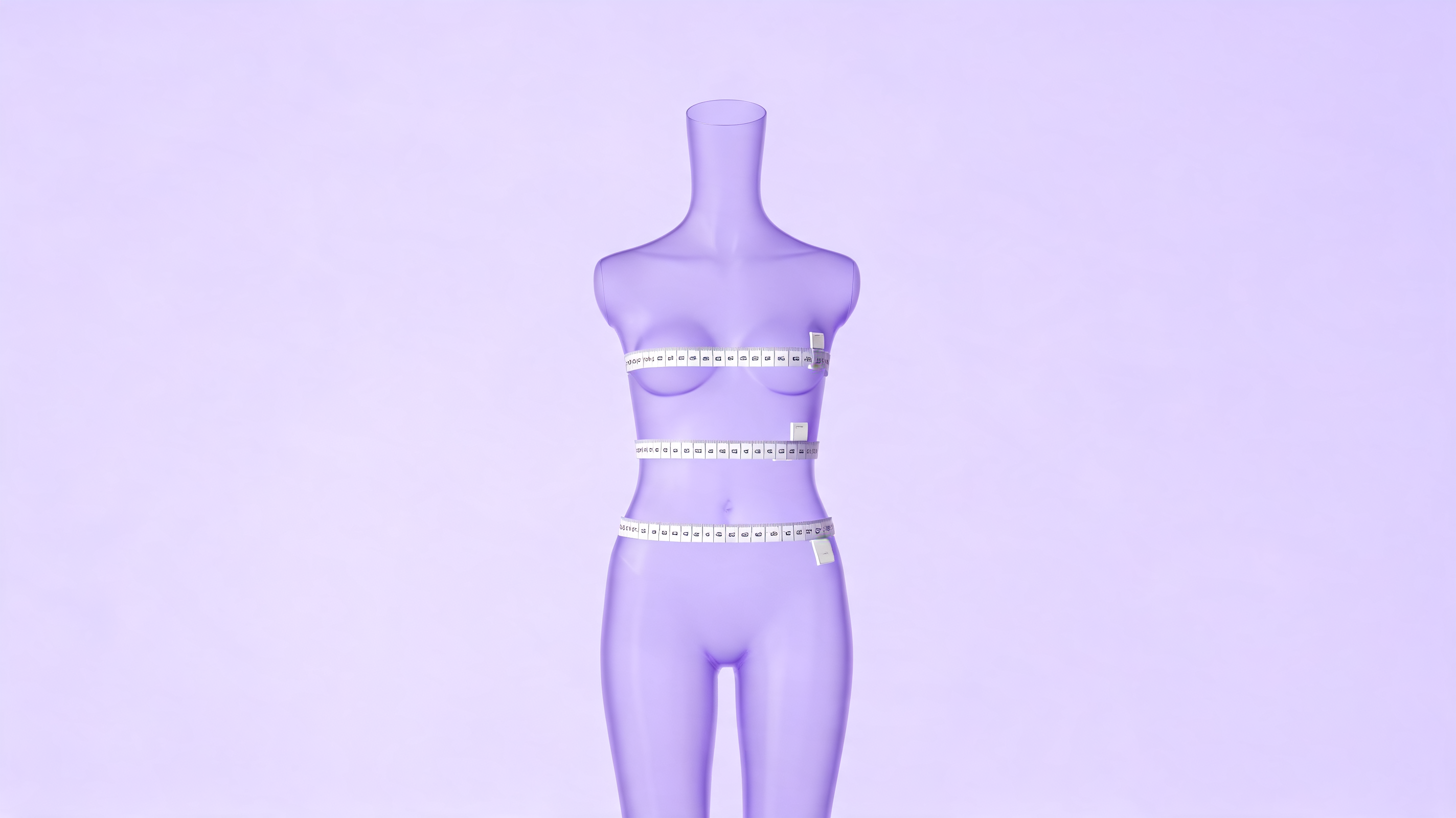
How to measure bust correctly: Stand upright. Wrap a soft tape measure at the fullest point across the chest — typically at nipple level — keeping it parallel to the floor. Breathe normally. Don't pull tight; the tape should sit snug without indenting. Read in centimetres for the most precise result.
How to Measure Waist and Hips for the Most Reliable Shape Result
Waist and hip errors can change both the shape label and the displayed ratios. Because several rules compare the waist with bust or hips, consistent placement matters throughout the calculation.
Waist: Natural Waist, Not the Navel
The natural waist is the narrowest horizontal circumference of your torso, typically 2–4 cm above the navel when you're standing relaxed. The navel itself is wider — often by 3–6 cm — and measuring there produces a higher waist number, which inflates your waist-to-hip ratio and can push an hourglass label toward rectangle.
How to find it: stand in front of a mirror, relax your torso (no sucking in), and look for the narrowest point. Bend slightly to one side — the natural waist crease appears immediately.
Hips: Widest Point, Feet Together
Hip circumference is taken at the widest horizontal circumference of the hips and buttocks — usually 18–23 cm below the natural waist. Stand with feet together (not hip-width apart). Spreading feet widens the measurement and underestimates hip circumference, which shifts the bust-to-hip comparison.
For step-by-step tape placement with diagrams for all six body visualizer inputs, see the complete body visualizer measurements guide.
How a Body Visualizer Uses These Ratios in 3D
The dedicated calculator uses the six-rule sequence above. The main 3D body visualizer uses a separate, simpler classifier based on chest-to-hip difference and waist-to-hip ratio, while the mesh responds to the entered measurements. Use the calculator for its documented label and the visualizer for an approximate visual comparison; their outputs can differ near a boundary.
The free body shape calculator applies the documented rules to the entered proportions. The separate 3D visualizer can show a different label near a rule boundary because it uses an independent approximation.
What Health Metrics Does the Calculator Also Report?
A female body shape calculator that's integrated with a body visualizer doesn't stop at the shape label. It also computes three numeric health metrics from your measurements. Understanding what each one actually represents matters.
Waist-to-Hip Ratio (WHR). The WHO expert consultation was held in 2008 and its report was published in 2011. It discusses 0.85 for women as a population-level cut point (WHO report). This is screening context, not an individual diagnosis or a body-shape boundary.
Body Mass Index (BMI). BMI is calculated from height and weight. The CDC's adult BMI categories (underweight, normal, overweight, obese) are a population-level screening reference — not a precise individual measure. Two women with identical BMIs can have very different body shapes, which is exactly why a body shape calculator paired with a 3D visualizer gives you more context than BMI alone.
Waist-to-Height Ratio (WHtR). WHtR divides waist circumference by height. It adds a waist-based proportion to the display, but the number should be interpreted with appropriate health guidance rather than as a diagnosis.
These metrics provide context beyond a geometric label. They do not establish health status on their own; discuss personal risk questions with a qualified healthcare professional.
For a detailed comparison of these metrics, see the guide on body visualizer vs. BMI calculator.
How to Interpret Your Female Body Shape Calculator Result
Getting a shape label is straightforward. Knowing what to do with it takes a bit more context. Here's what the label does — and doesn't — tell you.
What it tells you:
- Your bust, waist, and hip proportions relative to each other
- Which clothing cuts are designed for your proportional geometry (pear shapes typically need a different hip-to-waist ratio in trousers than rectangle shapes, for example)
- A baseline shape that can be compared against goal measurements — either by re-entering target numbers or using a side-by-side comparison in a 3D visualizer
What it doesn't tell you:
- Where your body fat is actually stored (visceral vs subcutaneous)
- Your muscle mass, bone density, or hydration level
- Whether your current shape is healthy — that depends on the numeric metrics (WHR, WHtR) and a conversation with a clinician, not the shape label
One genuinely useful application most users overlook: the body shape label can change over time at the same weight. If you lose centimetres from your waist but your bust and hip measurements stay similar, you can shift from rectangle to hourglass without the scale moving at all. That's invisible to a BMI calculator but visible in a body shape calculator.
For more on using a body visualizer to set shape-based weight loss goals rather than scale-based ones, see the guide on body visualizer for weight loss goals.
What Causes a Shape Label to Change?
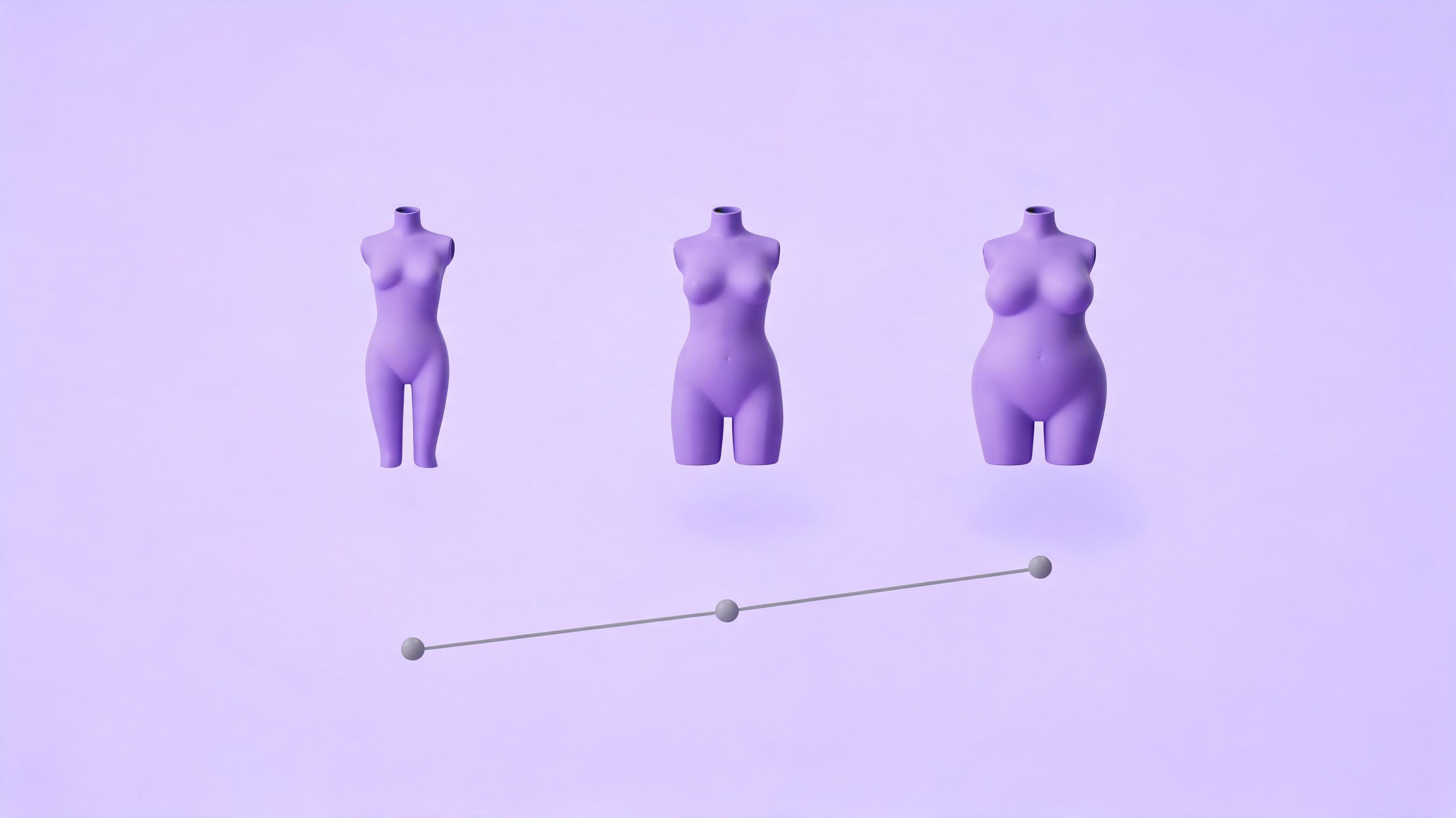
Shape labels sit at ratio boundaries — that's why small measurement changes can flip the label. It's worth understanding which inputs are most likely to cause a label change.
Waist measurements are sensitive to conditions. Posture, tape placement, breathing, clothing, and time of day can all affect a reading. Measure under the same conditions each time and repeat an unexpected value before comparing labels.
Hip measurements also need verification. If a value changes unexpectedly, check that the tape is level, your feet are together, and you measured the widest point. A difference may reflect technique, timing, or a real change, so one reading cannot distinguish the cause.
Bust readings can change for several reasons. Tape placement, clothing, posture, and real body changes can all affect the measurement. Repeat an unexpected value under the same conditions before treating a new label as a trend.
For guidance on tracking changes over time with a visualizer, see body visualizer for fitness tracking.
Frequently Asked Questions
What four measurements does a female body shape calculator need?
A female body shape calculator needs shoulders, bust (fullest point), waist (natural narrowest point), and hips (widest point, feet together). Height and weight are separate inputs used for metrics such as BMI and WHtR.
What is the most common female body shape by measurement?
There is no single most common category that applies to every population or calculator, because samples and classification rules differ. This calculator simply reports the first rule your measurements match; it does not rank any shape as more desirable.
Can my female body shape change over time?
Yes. A label can change when shoulder, bust, waist, or hip measurements cross one of the calculator's boundaries. Bodies and measurements can change for many reasons; compare readings taken with the same technique and avoid treating a label change as a health conclusion.
What is a healthy waist-to-hip ratio for women?
The WHO report from the expert consultation held in 2008 and published in 2011 discusses 0.85 for women as a population-level WHR cut point. It is screening context, not a diagnosis; a clinician can interpret it alongside other relevant factors.
Is a female body shape calculator the same as a 3D body visualizer?
No. The dedicated calculator applies the six ordered rules documented above, including shoulder width. The 3D visualizer uses a separate approximation and renders a deformable mesh for visual comparison, so labels can differ near a boundary. You can try the 3D body shape preview for free — no account or download required.
Conclusion
A female body shape calculator compares four measurements through six ordered outcomes. Its value is a repeatable geometric summary of your proportions, not a judgment about health or appearance.
The calculation only works if the inputs are consistent. Measure shoulders as instructed, bust at the fullest point, waist at the natural narrowest point, and hips at the widest point with feet together.
If you want an approximate 3D silhouette alongside the calculator label, open the free 3D body shape preview. It uses a separate visualizer model and updates in real time.
To understand what the 3D model can and cannot show about your body, read the body visualizer accuracy guide.
Sources
- World Health Organization, Waist Circumference and Waist-Hip Ratio: Report of a WHO Expert Consultation, Geneva, December 2008. Retrieved 2026-07-17, https://www.who.int/publications/i/item/9789241501491
- Centers for Disease Control and Prevention, About Adult BMI, retrieved 2026-07-17, https://www.cdc.gov/bmi/adult-calculator/bmi-categories.html