What body fat percentage to see abs for men?
For men, the usual answer to what body fat percentage to see abs is about 10–14%. That range comes from the male illustration in HPRC's body-composition guide, which labels 10–14% as visible abs. The guide's text gives a looser answer to what body fat percentage to see abs: under 15%.
For comparison, the American Council on Exercise (ACE) places men's "athletes" category at 6–13% and "fitness" at 14–17%. So when men ask what body fat percentage to see abs, the range they are given overlaps the leaner end of what ACE calls fit.
What body fat percentage to see abs for women?
For women, the commonly cited answer to what body fat percentage to see abs is about 15–18%, again from HPRC's illustration. Its text puts the figure at under 20%. Women carry more essential fat than men, which is why the range is higher for women.
HPRC also notes that women need about 17% body fat to menstruate and about 22% for a regular cycle, so part of the visible-abs range sits below the level linked with regular cycles. This is general guidance, not a personal threshold. If you are a woman asking what body fat percentage to see abs, it is a good reason not to aim for the low end without talking to a professional. The calculator shows a note when a woman's current value or target is below 17%.
How to use the comparison calculator
The calculator turns the question of what body fat percentage to see abs into numbers you can compare with your own.
First, choose the reference sex and enter your current weight in kilograms or pounds. Next, enter your current body fat estimate; if you don't have one, the Navy body fat calculator gives a starting point from a few tape measurements. Finally, enter a comparison target. It starts at the top of the reference range for your sex.
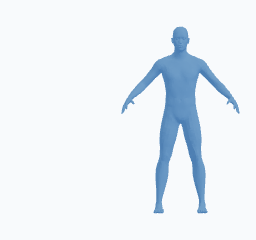
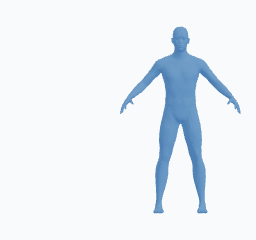
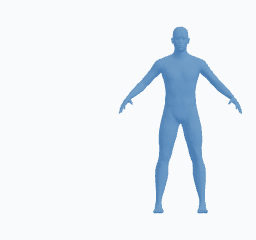
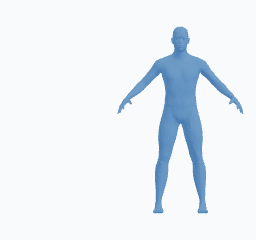
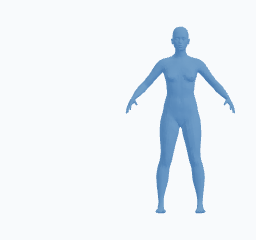
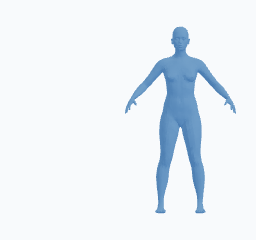
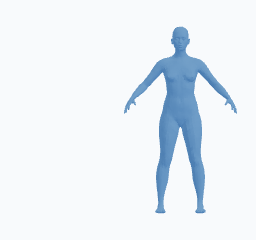
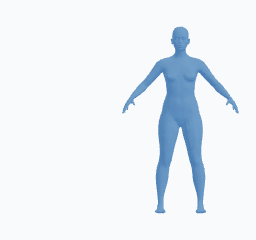
The result says whether your current estimate is above, within or below the commonly cited answer to what body fat percentage to see abs. Only when you are above it, and the target is lower than your current value, does it show an estimated amount of fat to lose. Two 3D models appear side by side, one at your current value and one at the target.
How the calculation works
The calculation keeps lean mass constant, following the arithmetic in ACE's fitness math material. Lean mass is your current weight multiplied by one minus your current body fat. Your weight at the target is that lean mass divided by one minus the target body fat. The estimated fat to lose is the difference between the two weights.
For example, an 80 kg man at 25% body fat has 60 kg of lean mass. At a 14% target he would weigh about 69.8 kg, so the estimate is about 10.2 kg of fat. The number is a scenario, not a forecast: lean tissue and water change too, and the page gives no diet plan, training plan or timeline.
Why there is no single answer to what body fat percentage to see abs
The ranges above are averages, and three things move the answer to what body fat percentage to see abs for you.
Where you store fat
Some people store more fat around the abdomen and some on the hips, thighs or arms. Two people at the same percentage can look very different around the stomach, so they won't share one answer to what body fat percentage to see abs.
How developed your abdominal muscles are
Thicker abdominal muscles push against the fat above them, so for well-trained people the answer to what body fat percentage to see abs can be slightly higher. Training changes the muscle, but not the fat that covers it.
How your body fat was measured
A smart scale, a tape-measure body fat calculator and a DEXA scan can give readings several points apart. When people compare notes on what body fat percentage to see abs, they often use different methods, which is one reason the quoted ranges are wide. Use the same method each time.
What the 3D models show
The models can't tell you what body fat percentage to see abs in your case. They show how your overall outline changes between two body fat levels, without drawing abdominal lines. The example cards use the boundaries from HPRC's illustration and load straight into the calculator. To view a single level in 3D, use the body fat visualizer.
Is a very low body fat percentage healthy?
Knowing what body fat percentage to see abs is not the same as knowing what is healthy for you. ACE's categories list essential fat at 2–5% for men and 10–13% for women. HPRC notes that too little body fat can disrupt sex-hormone production, which can affect bone health, and that very low levels are hard to sustain.
The calculator will not accept a target at or below 5% for men or 13% for women, and it shows a caution near those levels. These are guardrails, not proof that a higher value is safe for you. A doctor or registered dietitian can help you choose a target.
Frequently asked questions
What body fat percentage to see abs as a man?
About 10–14% in HPRC's illustration, and under 15% in its text. Your own number may differ.
What body fat percentage to see abs as a woman?
About 15–18% in HPRC's illustration, and under 20% in its text.
Can you see abs at 20% body fat?
Most men at 20% will not see clear abs, because that is above the usual answer to what body fat percentage to see abs for men. Some women around 20% may see an outline, since HPRC's text puts the female figure under 20%.
Why can't I see my abs at a low body fat percentage?
Your method may read low, you may store more fat around your stomach, or your abdominal muscles may be less developed. That is why the answer to what body fat percentage to see abs differs from person to person.
Does age change what body fat percentage to see abs?
The commonly cited ranges are not split by age. Treat them as a starting point and track your own trend.
How exact is the answer to what body fat percentage to see abs?
Not very. The ranges come from an illustrated guide, and estimates can be several points off.
Does the 3D model show my abs?
No. It shows overall shape only, so use the ranges above to judge what body fat percentage to see abs.
Is this a diet or medical plan?
No. This page explains what body fat percentage to see abs with sourced ranges and simple arithmetic. It is not medical or nutrition advice.