





How to use this waist hip ratio calculator
Enter waist and hip circumferences in the waist hip ratio calculator, choosing either centimetres or inches. Both measurements must use the selected unit. The result divides waist by hips and displays a ratio beside the approximate model, so you can inspect the arithmetic and illustration together.
The waist hip ratio calculator uses the selected reference sex to choose a comparison cutoff. Height and weight are optional and affect only the illustration. Leaving them blank uses the reference values stated below the inputs. They do not change the quotient or its comparison with the cited threshold.
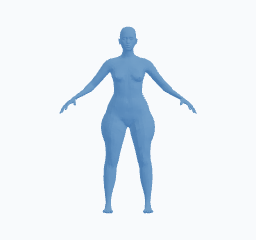
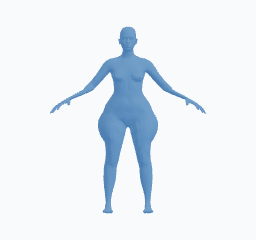
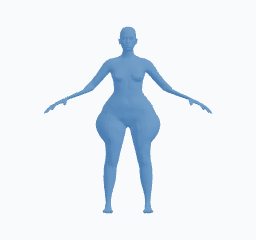
Try an example in the waist hip ratio calculator before entering your own numbers. Each example uses 100 cm hips and a different waist measurement. Loading a card replaces the inputs and displays the corresponding model. The examples are constructed scenarios, not population averages, desirable proportions, or evidence about anyone's health.
Check your waist hip ratio calculator inputs
Before interpreting a waist hip ratio calculator result, check that waist and hip values were not reversed. Waist is the numerator and hips are the denominator. A hip to waist ratio calculator would produce the reciprocal, which must not be compared with the waist-to-hip thresholds used on this page.
The waist hip ratio calculator keeps conversion precision internally while displaying measurements with at most one decimal place. Its ratio is shown with two decimals. For example, a ratio just below 0.90 can display as 0.90 after rounding; the classification still uses the original unrounded value, as explained beside the result.
How to measure waist and hips for the ratio
Use a consistent protocol for the waist hip ratio calculator. The WHO report places the waist tape halfway between the lowest palpable rib and the top of the hip bone. Hip circumference is measured around the widest part of the buttocks. Keep the tape level and snug without compressing tissue.
Before using the waist hip ratio calculator, stand upright and relaxed and take the waist reading after a normal breath out. The WHO protocol recommends repeated measurements: average two readings within one centimetre, or repeat them if they differ more. A helper can make it easier to keep the tape level.
Record the location used before entering the waist hip ratio calculator. Clothing waist sizes and natural-waist styling measurements can use different landmarks. If you are moving from the body type calculator, recheck the waist location instead of assuming every tool uses an identical measurement protocol.
Waist to hip ratio chart for women and men
This waist hip ratio calculator uses the cutoffs in Table A1 of the WHO consultation report: at least 0.90 for men and at least 0.85 for women, associated there with substantially increased risk of metabolic complications. The table appears above the examples for direct comparison.
The waist hip ratio calculator describes smaller values as below the cited cutoff. It does not invent additional low, moderate, and high categories or label everyone below a threshold healthy. The report discusses differences between populations and measurement methods; a single boundary does not replace individual assessment.
The waist hip ratio calculator is an adult reference tool. It does not assess children, pregnancy, medication effects, medical history, blood pressure, or laboratory results. Use its numerical result as context for a discussion, not a conclusion that a particular condition is present or absent.
What your waist-to-hip ratio means
The arithmetic in a waist hip ratio calculator describes relative circumferences, not absolute size. A waist of 72 cm with 90 cm hips gives the same 0.80 ratio as an 80 cm waist with 100 cm hips. Those inputs describe different dimensions despite producing the same quotient.
That is why the waist hip ratio calculator includes an illustration and preserves the original measurements. Inspecting the values helps you see whether a change came from the waist, the hips, or both. A ratio alone cannot explain what changed between two measurement sessions or why it changed.
Use the waist hip ratio calculator without making an appearance judgment. It does not define an ideal body shape or rank silhouettes by attractiveness. If your interest is how measurements affect an outline, the body measurement visualizer offers additional chest, inseam, shoulder, and body-composition controls.
The waist hip ratio calculator model is an approximate reference mesh. It cannot reconstruct how tissue is distributed around the front, sides, or back of a real person. Its bounded deformation also limits the visible effect of extreme values. Read the actual quotient even when the visual change appears small.
Waist-to-hip ratio versus BMI and waist-to-height ratio
A waist hip ratio calculator needs two circumferences. BMI instead relates body weight to height squared, while waist-to-height ratio divides waist circumference by height. These calculations answer different numerical questions. None can be converted into the others without the additional measurements required by its formula.
Changing only height in the waist hip ratio calculator therefore changes the illustrative model, not the result. Changing only weight has the same separation. If you want to explore the relationship between height and weight, use the BMI visualizer and review the limitations of its own method.
The waist hip ratio calculator does not estimate a body-fat percentage from its ratio. Two measurements do not provide enough detail to identify individual fat mass or lean mass. For a separate circumference-based estimate, the Navy body fat calculator asks for the additional information its method requires.
Compare measurements over time
Keep dates, original values, and measurement notes alongside a waist hip ratio calculator result. Use the same tape and landmarks when practical. A copied number without its unit or measurement location is difficult to compare later. This page does not maintain a personal history, so save any records separately.
If a waist hip ratio calculator result changes unexpectedly, first check your inputs and repeat the measurements. A small movement near a cutoff can change the displayed category without demonstrating a sudden biological change. The calculator cannot determine whether a difference reflects measurement technique or a real change.
Use the waist hip ratio calculator examples to learn the relationship between inputs, rather than treating the examples as goals. With hips held at 100 cm, a change from 80 to 90 cm waist increases the ratio from 0.80 to 0.90. This arithmetic does not suggest that either example should describe you.
Frequently asked questions
What is the formula?
The waist hip ratio calculator divides waist circumference by hip circumference, with both in the same unit. For an 80 cm waist and 100 cm hips, the result is 0.80. The ratio itself has no unit because the units cancel during division.
Can I use inches?
Yes. The waist hip ratio calculator accepts inches and centimetres and converts measurements internally. Changing units preserves the underlying values. Do not enter one circumference in inches and the other in centimetres within the same selected system, because that would produce a misleading result.
Why does a rounded boundary still say below the cutoff?
The waist hip ratio calculator classifies the full-precision quotient before formatting it. For example, 89.5 divided by 100 is below 0.90 even though the two-decimal display rounds to 0.90. The explanation next to the result makes this distinction explicit instead of silently changing the classification.
Does a low ratio mean I am healthy?
No. A waist hip ratio calculator compares two measurements with a published reference cutoff. It cannot evaluate your overall health or rule out illness. A value below that cutoff should be read literally as below the cited threshold, not as a medical clearance.
Is the preview a body scan?
No. The waist hip ratio calculator adjusts a reference model using your entered dimensions and any stated defaults. It does not measure you, infer internal anatomy, or predict future appearance. The numerical result and the illustration have different purposes and should be interpreted separately.